
First…. What Are Sulfates?
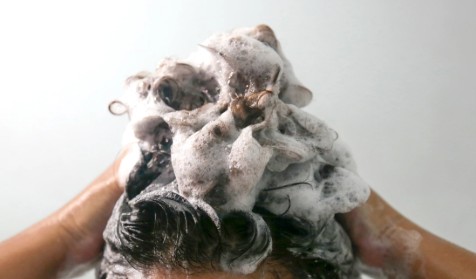
What they do:
They’re aggressive detergents. They strip oil, dirt, buildup, your hopes, your dreams… everything.
Pros:
- Incredible at cleaning
- Great for occasional heavy buildup (think swimmer hair, product junkies)
Cons:
- Drying AF
- Fade color
- Irritate sensitive scalps
- Can mess with curls, texture, and fragile hair
Bottom line:
Effective but harsh. Like washing silk with dish soap.
The 4 Main Types of Sulfates (Hair Edition)
1. Sodium Lauryl Sulfate (SLS) aka: The unhinged one.
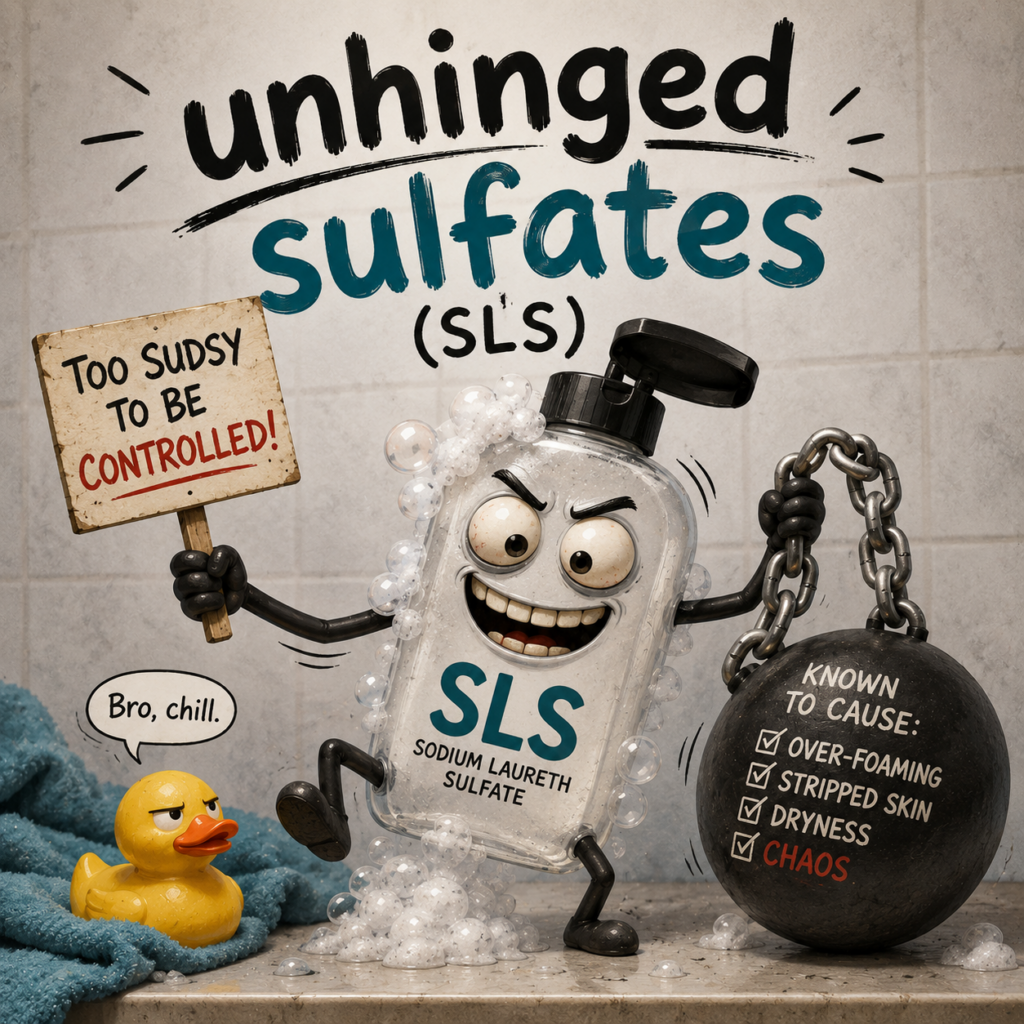
What it is:
A very small, very aggressive cleansing molecule.
How it behaves:
- Strips oil like it’s offended by moisture
- Penetrates the hair shaft easily
- Can disrupt the scalp barrier
Best for:
- Industrial grease
- The floors
- Absolutely not your color-treated hair
Verdict:
Harsh AF. If this is in your shampoo and your hair feels dry, brittle, or angry—it’s not you, it’s SLS. Think of it like washing your hair with sand. Yikes!
2. Sodium Laureth Sulfate (SLES) aka: The “See, I’m nicer” sibling.
What it is:
SLS that’s been ethoxylated (chemically softened).
How it behaves:
- Still strong, just less brutal
- Creates lots of foam (marketing loooooves this)
- Slightly less irritating than SLS
Best for:
- Normal to oily hair
- People who like squeaky-clean hair
- People who don’t color their hair
Verdict:
Less evil, still aggressive. This is the one brands defend by saying “it’s not that bad.”
Narrator: It is. It’s like washing your hair with small rocks. Not as aggressive as sand, but still rough!
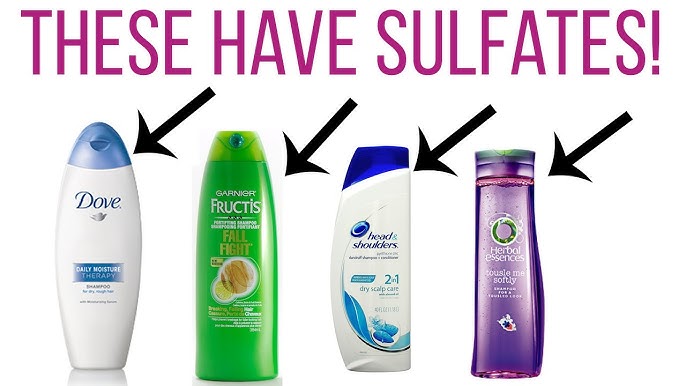
3. Ammonium Lauryl Sulfate (ALS) aka: The fast but reckless cleaner.
What it is:
Similar structure to SLS, but uses ammonium instead of sodium.
How it behaves:
- Cleans VERY quickly
- Rinses fast
- Can still irritate the scalp
Best for:
- Short hair
- Men’s shampoos
- Occasional clarifying
Verdict:
Slightly less stripping than SLS, but don’t get excited. Still not curl- or color-friendly.
4. Ammonium Laureth Sulfate (ALES) aka: The most “civilized” sulfate.
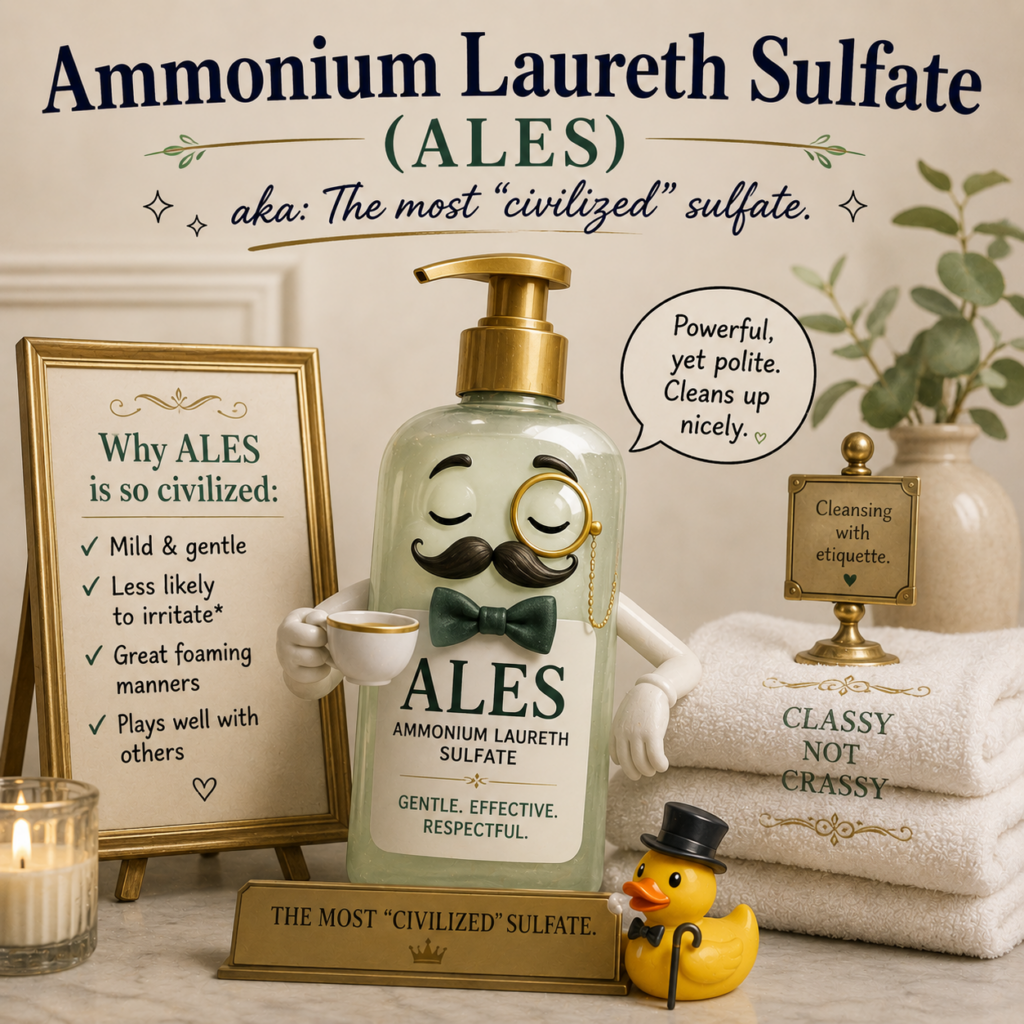
What it is:
ALS + ethoxylation = gentler version.
How it behaves:
- Less irritating than the others
- Still foams well
- Still removes natural oils
Best for:
- Normal hair with no chemical services
- People with zero scalp sensitivity
Verdict:
If you must use a sulfate, this is the least offensive choice.
Still not something I’d put near fragile hair long-term.
So, If it says “Sulfate free” what did they replace it with?
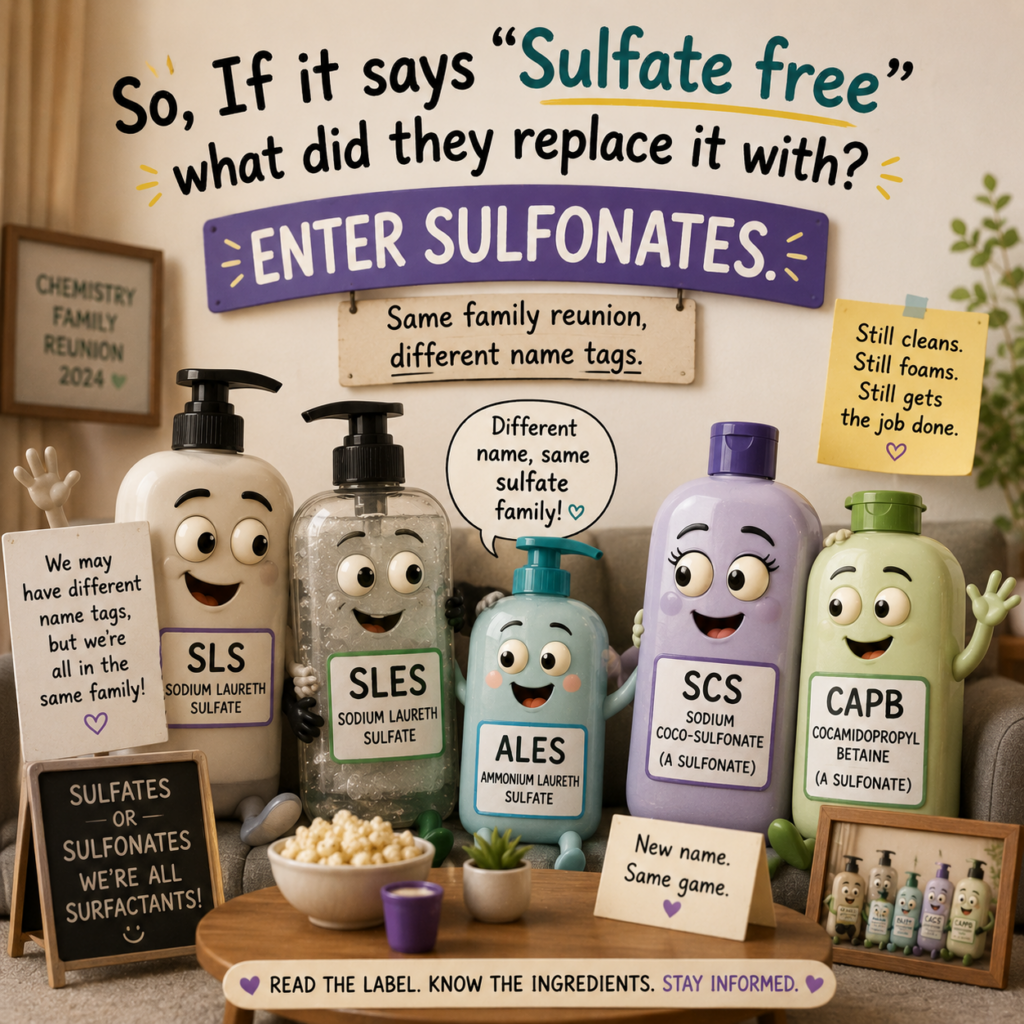
Enter Sulfonates. Same family reunion, different name tags.
Reminder: sulfonates ≠ sulfates chemically
Functionally? They can still be aggressive little gremlins.
Oh good, the other villains. Same family reunion, different name tags. Let’s break them down properly—no marketing fluff, no bullshit.
The Main Types of Sulfonates (in Haircare)
1. Sodium C14-16 Olefin Sulfonate aka: The wolf in sheep’s clothing
What it is:
A petroleum-derived surfactant with a very strong cleansing charge.
How it behaves:
- Extremely good at cutting oil
- Strips buildup fast
- Can leave hair squeaky, rough, and dry
Where you’ll see it:
- “Sulfate-free” clarifying shampoos
- Curl products that secretly nuke curls
Best for:
- Heavy product buildup
- Hard-water residue
- Occasional clarifying only
Verdict:
This is basically SLS in a fake mustache. Do not use regularly unless your scalp is an oil slick and your ends hate you.
2. Ammonium Lauryl Sulfonate Aka: the most common liar on shampoo labels
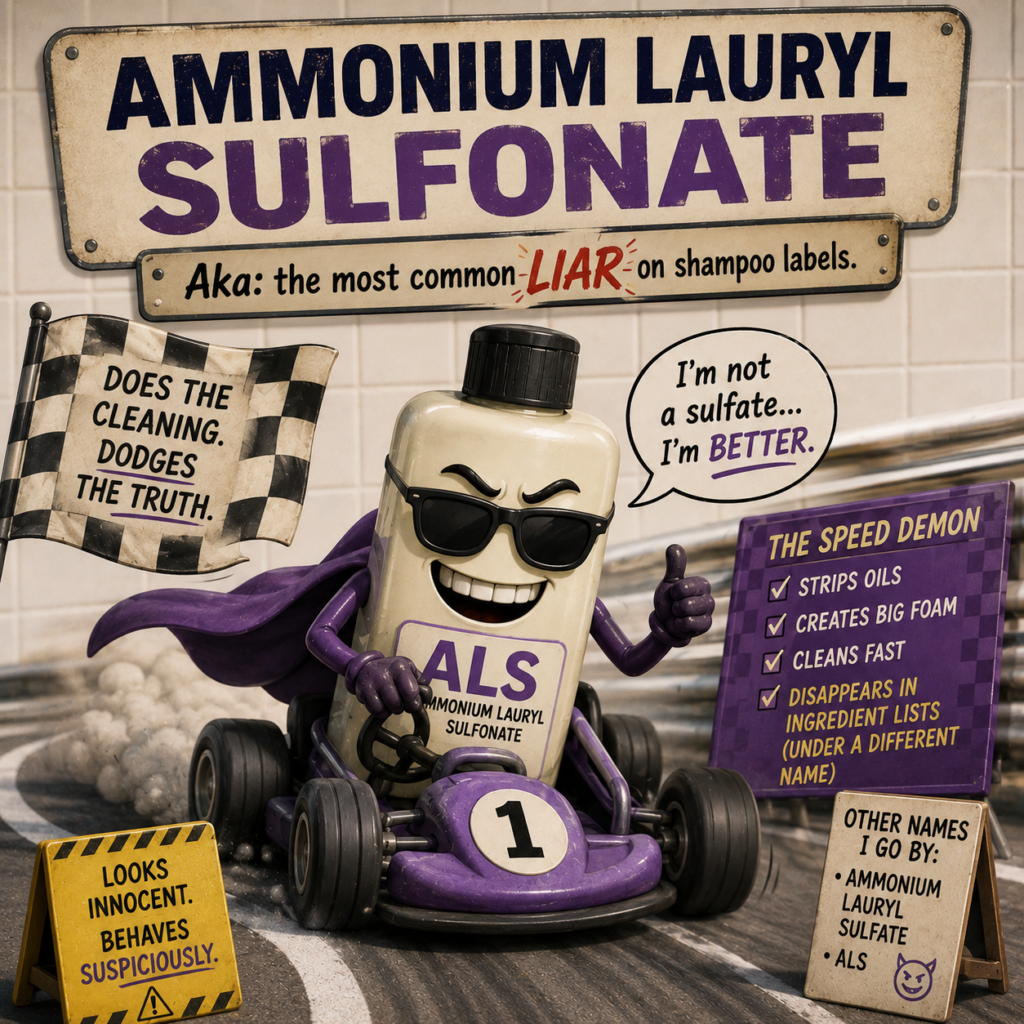
The speed demon.
What it is:
Similar to olefin sulfonate but uses ammonium for faster rinse-off.
How it behaves:
- Strong cleanser
- Less residue than sodium versions
- Still strips oils
Best for:
- Very oily scalps
- Short hair
- People who wash daily and don’t color
Verdict:
Marginally gentler than olefin sulfonate, but still not curl- or color-friendly.
3. Sodium Lauryl Sulfoacetate (SLSa) aka: The confusingly innocent one.
What it is:
A much larger molecule derived from coconut or palm.
How it behaves:
- Cleans without penetrating the hair shaft
- Less irritating
- Much gentler than the others
Where you’ll see it:
- “Natural” shampoos
- Baby products
- Solid shampoo bars
Verdict:
Despite the scary name, this one is actually fine for many people.
Not ideal for very dry or curly hair, but nowhere near as stripping.
4. Sodium Xylene Sulfonate / Sodium Cumene Sulfonate aka: The sidekick nobody notices.
What they are:
Hydrotropes—not true cleansers, but used to:
- Thin formulas
- Boost foam
- Help other surfactants dissolve
How they behave:
- Mildly drying in high concentrations
- Can amplify irritation from stronger cleansers
Verdict:
Not the main villain, but if paired with aggressive surfactants, they help the chaos.
What to use and when:
- Olefin sulfonate: Clarify only, not daily
- Ammonium lauryl sulfonate: Oily scalp exception
- Sulfoacetate: Acceptable for many
- Xylene/cumene: Fine in small doses
Sulfates ↔ Sulfonates: Functional Equivalents
Most Harsh / Clarifying Tier (Nuclear Clean)
| Sulfate | Closest Sulfonate Equivalent | Why |
|---|---|---|
| Sodium Lauryl Sulfate (SLS) | Sodium C14-16 Olefin Sulfonate | Both are extremely strong, oil-stripping, cuticle-opening detergents |
Translation:
If a shampoo ditched SLS but added olefin sulfonate, your hair was not saved. It was betrayed.
Strong but “Softened” Tier
| Sulfate | Closest Sulfonate Equivalent | Why |
|---|---|---|
| Sodium Laureth Sulfate (SLES) | Ammonium Lauryl Sulfonate | Slightly larger molecules, still very cleansing, still drying |
Translation:
These are the “I’m gentler now, I swear” cleansers. Better than the worst, still not curl- or color-friendly.
Milder / Acceptable-for-Some Tier
| Sulfate | Closest Sulfonate Equivalent | Why |
|---|---|---|
| Ammonium Laureth Sulfate (ALES) | Sodium Lauryl Sulfoacetate (SLSa) | Larger molecules, less penetration, less irritation |
Important note:
Despite the terrifying name, SLSa is NOT the same as SLS. This is the one that causes the most internet confusion.
Supporting / Formula Helper Tier
| Sulfate-adjacent | Sulfonate Equivalent | Role |
|---|---|---|
| — | Sodium Xylene Sulfonate / Sodium Cumene Sulfonate | Foam boosters, solubilizers—not primary cleansers |
These don’t cleanse much on their own but amplify whatever monster they’re paired with.
Big Picture Reality Check
Now we have to add in pH concerns. For the science of pH read our blog “Why pH Matters”.
pH affects how the hair reacts. The surfactant determines how much oil gets removed. A pH-balanced shampoo is always preferable to a high-pH shampoo.
However, pH balance doesn’t change how aggressively a cleanser removes oil. If a shampoo contains strong cleansers such as sulfates or olefin sulfonate, it may still be too harsh for color-treated, dry, curly, or chemically processed hair—even if the pH is ideal.
If your hair is colored, curly, dry, thinning, or emotionally fragile (same)—read the label and don’t let “sulfate-free” lull you into a false sense of security.
Just because a shampoo is considered “professional” doesn’t mean it’s good…
It could be chemical warfare in a pretty bottle. Don’t judge a shampoo by the front label. Judge it by the entire formula.
Stay educated, beautiful!