
How Lighting Changes The Way You See Your Hair
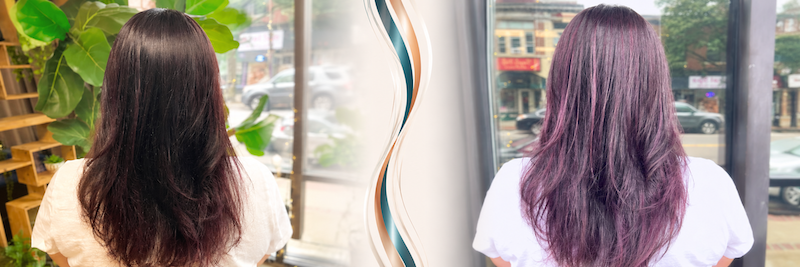
You leave the salon, check your hair in the mirror and love it.
The color is rich. The highlights are dimensional. The shine is beautiful. Everything looks exactly right.
Then you walk outside.
Suddenly, your brunette looks warmer. Your copper looks brighter. Your blonde seems lighter. Maybe you spot a hint of red, gold, or caramel that you swear wasn’t there five minutes ago.
So which color is your hair?
All of them.
One of the most interesting things about professional hair color is that it doesn’t look the same everywhere. Natural sunlight, cloudy daylight, warm household bulbs, fluorescent office lighting, soft restaurant lighting, and your bathroom mirror can all emphasize different tones within the same head of hair.
These two photos are a perfect example.
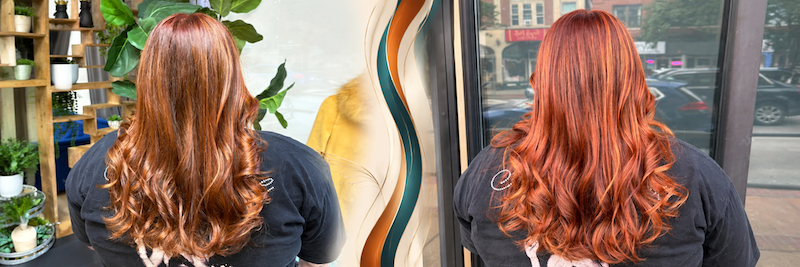
Same Day. Same hair. Different lighting.
Outside, her color reads richer and deeper. Inside, the copper and auburn tones become brighter and more noticeable.
Nothing happened to her hair between photographs.
The light changed.
And understanding that piece of hair-color science can make you much better at choosing a color you’ll love in real life—not just in the salon chair.
A Very Quick Lesson in Light—No Chemistry Degree Required
Here is the easy version.
We see color because light hits an object, and some of it reflects back to our eyes.
Hair works the same way.
Your hair color contains different tones and pigments. Change the light hitting your hair, and some tones become more noticeable while others recede.
Think of it like looking at the same paint color in different rooms.
A cream wall might look warm and buttery near a sunny window, almost white under a bright LED, and considerably more golden under a table lamp at night.
The paint didn’t change. Its environment did.
Hair color can be even more dynamic because professionally colored hair often contains intentional dimension—different depths, highlights, lowlights and tonal variations designed to keep the result from looking flat.
That means good dimensional hair color can have a bit of a personality depending on where you see it.
Natural Daylight: Where Hair Shows Its True Colors
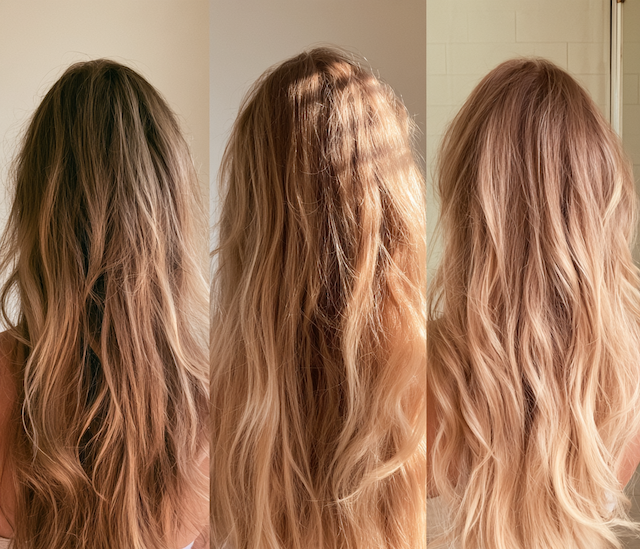
If you really want to see what is happening within your hair color, natural daylight is one of the most useful places to look.
Daylight can expose subtle variations that are harder to see indoors.
A brunette may suddenly reveal caramel ribbons.
A dimensional red may show copper, auburn and cinnamon.
A blonde may appear brighter around the face.
Highlights that seem very subtle inside can become much more noticeable outdoors.
That is exactly what you can see in these photographs. Indoors, this guest’s hair appears somewhat deeper and more brunette-forward, with warm dimension running through it. Move outside and those copper-red tones become considerably more vibrant. Neither appearance is more “correct.”
They’re two expressions of the same customized color. And both are ABSOLUTELY beautiful – Thank you to Celina, one of our very talented stylists, who specializes in vivid colors
Direct Sunlight: Pump Up the Volume
Direct sunlight is essentially a spotlight for hair.
It can make lighter pieces look brighter, emphasize shine and increase the visual contrast between different tones. Warm colors can come alive outside. Copper, auburn, red, honey, caramel and gold can appear much more intense in strong natural light.
So, if you’ve ever taken a sunny vacation photo and thought:
“Since when is my hair that red?”
The answer may simply be: since the sun hit it.
This is also worth remembering when you’re using outdoor photographs as hair-color inspiration. The gorgeous copper or blonde you saved from Instagram may look quite different indoors.
Cloudy or Indirect Daylight: The Hair-Color Sweet Spot
Photographers love soft, diffused natural light for a reason.
Cloud cover or indirect window light reduces harsh shadows while still giving you relatively natural color. For hair, this can be particularly flattering. Soft natural light reveals dimension without letting one highlight or tone dominate the entire look.
If you want, take a realistic photo of your freshly colored hair; stand near a window or outdoors in open shade, not in direct midday sun. You’ll get a better representation of the overall color.
Warm Indoor Lighting: Bring on the Gold
Think about your living room in the evening. A cozy restaurant. A hotel lobby.
Many of those spaces use warmer lighting because it creates atmosphere. Warm artificial light can also emphasize warm tones in hair.
Your blonde may look more honey or golden. Your brunette may appear richer. Copper and red can become more pronounced.
Caramel highlights can almost glow. This can all be beautiful—but it can also create confusion.
If your hair looks warmer in your bathroom at night than it did when you left the salon that afternoon, that does not necessarily mean your color suddenly “turned brassy.”
Before you panic, look at it again in natural light. If it still feels off, call your colorist. Toners can be a wonderful way to achieve that precise “in between” you might be looking for.
Fluorescent and Cool Lighting: Don’t Judge Your Hair Too Harshly
Then there is fluorescent lighting. Fluorescent lighting has many talents. Making anyone feel especially good about their hair is not one of them.
Office buildings. Dressing rooms. Schools. Medical offices. Some retail stores. Not exactly famous for making anyone look spectacular.
Cooler artificial light can change the way both your complexion and your hair color appear. Warmth may seem more muted. Some colors can look flatter. Skin and hair may appear less luminous. So, here’s a salon rule worth remembering:
Never judge your hair color based solely on how it looks under bad fluorescent lighting. Your hair doesn’t spend its entire life beneath the lights at CVS. Give it another look in daylight.
Yes, Bathroom Lighting Counts
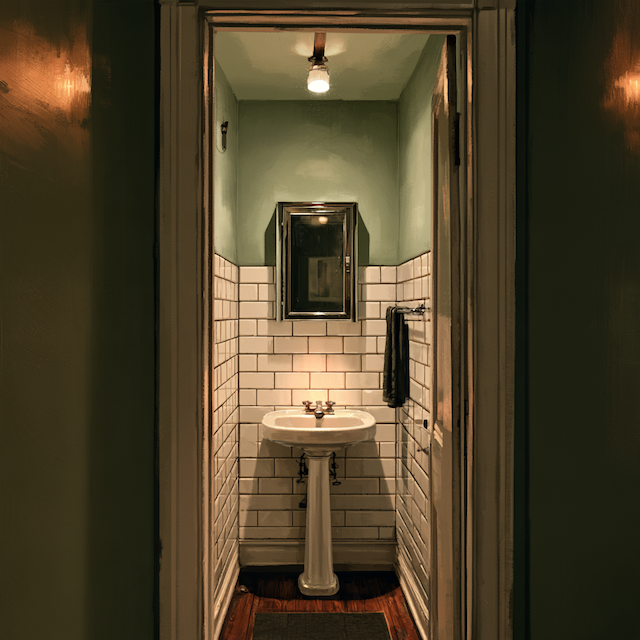
Bathrooms deserve their own category because we inspect ourselves the most here. Unfortunately, they usually contain some of the least forgiving lighting in the house.
Bright overhead fixtures can create shadows. Warm bulbs can exaggerate gold. Cool LEDs may mute warmth. Lighting positioned only above the mirror can make your face and hair look different than with more balanced lighting.
So when you’re telling your stylist, “My hair looks really warm at home,”
there’s another useful question: What does it look like outside?
That information helps distinguish the color itself from the environment you’re seeing it in.
Why Dimensional Hair Color Changes More Dramatically
This effect can be especially noticeable with dimensional color. Dimensional hair color deliberately combines multiple tones or depths rather than creating one visually uniform shade.
Think: balayage, highlights, lowlights, face-framing pieces, dimensional brunette, bronde, copper highlights, multi-tonal reds, or blended blondes.
Massachusetts salons increasingly describe these services as customized or dimensional color because the goal is often exactly that: depth, movement and a result tailored to the individual rather than one flat shade.
When multiple tones are present, different lighting has more material to work with. That’s why dimensional hair can look almost like it changes throughout the day.
It isn’t a defect. It can actually be part of what makes the color look sophisticated and natural.
Your Hair Color Doesn’t Live Alone
Here’s another part of the conversation clients don’t always consider:
You rarely see your hair on its own.
You see it next to your skin. Your makeup. Your clothing. Your jewelry.
And all those things influence how your hair color appears. If you’re taking a natural pause now and wondering what season you are, take a minute to read about your personal color palette.
Your Clothes Can Pull Different Tones Forward
Imagine rich copper-brown hair. Wear cream, camel, olive or chocolate, and the warmth in the hair may feel particularly harmonious.
Put the same person in crisp navy or cool charcoal, and the contrast changes.
Neither combination is right or wrong. They’re simply different.
This is one reason to consider your wardrobe when you’re contemplating a major color change.
If you practically live in earthy neutrals, you may respond differently to a warm dimensional brunette than someone whose closet is dominated by icy gray, cobalt and black.
Your stylist doesn’t need a tour of your closet. But telling them how you usually dress can help build the bigger picture.
Makeup Matters Too
Makeup works similarly.
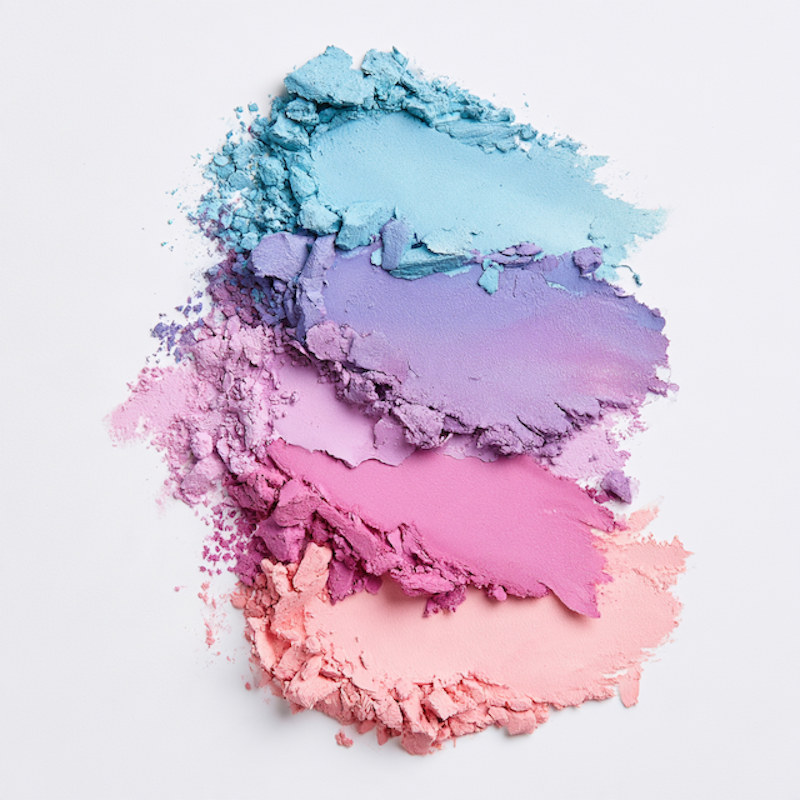
A warm bronzer or peach blush may amplify warmth around the face. A berry lip may interact differently with red hair than a coral lip.
Cooler eye makeup can create contrast against warm hair, while bronze or copper shades may reinforce it. Again, these aren’t rules. There are no fashion police waiting outside the salon (that we know of).
The point is that changing your hair color alters part of the visual palette around your face. When you’re making a dramatic shift—from blonde to brunette, for example, or brunette to copper—it may be fun to experiment with your makeup afterward. You may discover colors you never thought to wear before.
Planning Hair Color for a Wedding, Photoshoot or Special Occasion
Lighting becomes even more important when you’re coloring your hair for a specific event.
Say you’re getting married.
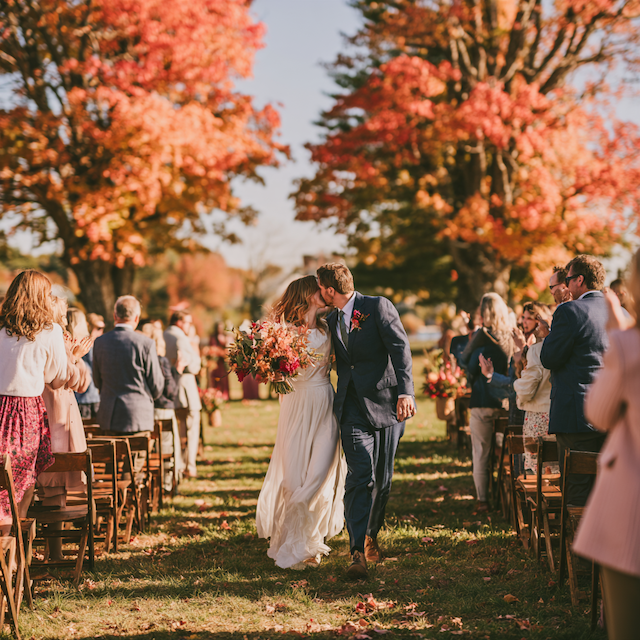
An outdoor September ceremony in New England will show your hair very differently than a candlelit evening reception.
A professional headshot photographed next to a large studio window may reveal more dimension than a corporate event under overhead LEDs. Senior Class portraits taken during golden hour may dramatically amplify warm tones. As will those outfit changes.
When you’re planning your next hair appointment around a major occasion, tell your colorist:
You don’t need to engineer your hair color around every bulb you’ll encounter. But these details can help your stylist understand how you want the finished result to present when it matters most.
Where is the event?
Is it indoors or outdoors?
Daytime or evening?
Are professional photographs involved?
What are you wearing?
Inspiration Photos Are Helpful—But Look Closely
We love inspiration photos.
They’re often one of the easiest ways to communicate what you like.
But here’s an important question to ask when you save one:
Do I love this person’s hair color—or do I love this photograph?
Because photography adds yet another variable.
The lighting may be warm.
The photo may be taken during golden hour.
The phone may have adjusted its white balance.
The image may have been edited.
A filter may have been applied.
The stylist may have photographed the finished result directly beside a window.
That doesn’t make the image dishonest. It simply means it represents that hair in one particular environment.
Instead of telling your stylist, “Make mine exactly this color,” talk about what specifically attracts you to the photograph.
Is it the:
- brightness around the face,
- copper tone,
- depth at the root,
- amount of contrast,
- softness of the highlights,
- richness of the brunette,
- golden warmth,
- coolness,
- shine,
- or overall level of dimension?
That is much more actionable information.
What Your Colorist Needs to Know Before Your Next Appointment
Great customized hair color starts with a conversation. Your stylist considers much more than a color swatch. Your natural color matters. Your hair’s previous color history matters. Texture matters. Condition matters. How often you heat-style matters. Your tolerance for maintenance matters. Your budget matters.
And the way you want your hair to look in everyday life matters.
Mane Street’s consultation approach already centers on factors such as natural texture, previous color, routine, maintenance preferences and what can be achieved safely and realistically.
Lighting can become another useful part of that discussion.
Try saying:
“I like how warm my hair looks outside, but I don’t want it to feel orange.”
Or:
“My blonde looks great in natural light, but very yellow under my bathroom lights.”
Or:
“I spend most of my day in an office and don’t want the color to look flat there.”
Or simply bring photographs. A few images of your hair in different environments can tell an experienced colorist a lot.
Try This Before Your Next Hair Appointment
For one day, become a detective.
Look at your hair: near a window in the morning, outside, in your car, in your bathroom, at work,
and at home at night. Take a few photographs without filters. Then compare them.
You may be surprised by how many different colors can live in one head of hair.
Ask yourself?
- Which version do I love most?
- Where does my hair seem too warm or too cool?
- Do I want more dimension—or less contrast?
- Do I like what sunlight brings out?
Those answers can make your next consultation considerably more productive.
Beautiful Color Is About More Than the Formula
Professional hair color has a science.
But there is also an art to creating hair that works for the person wearing it.
The goal isn’t simply to produce a technically correct shade beneath salon lighting.
It’s to create healthy, dimensional, wearable hair color that makes sense when you’re driving to work, meeting friends for dinner, standing outside at your child’s soccer game, or getting photographed at someone’s wedding.
At Mane Street Hair & Color Studio in North Attleboro, we believe a good consultation should help you understand your hair—not simply sell you a service.

So the next time you look in the mirror and wonder why your hair suddenly seems warmer, brighter, darker, or more copper than it did an hour ago, don’t automatically assume something has gone wrong. Walk toward a window. Take another look.
Because sometimes your hair color hasn’t changed at all.
You simply saw another side.